Ethel Walker School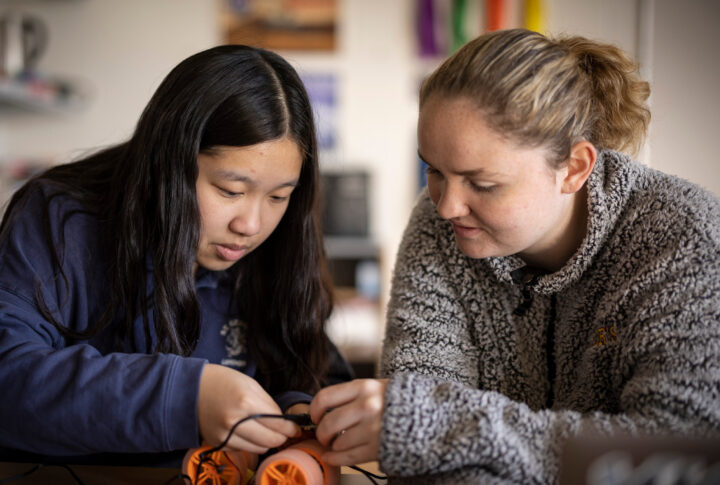
At The Ethel Walker School, students learn the fundamental principles of science and the essential skills required to investigate the foundational disciplines of physics, chemistry, and biology.
In addition, students are able to go beyond the basic science requirements and explore individual interests through numerous science electives. With this strong foundation, students engage in inquiry-based discovery, research-guided coursework, and student-driven exploration of topics that are engaging and relevant to their lives.
As science educators, we prepare students to think critically and to recognize bias as they explore scientific questions through student-designed lab experiments. The rich experience of hands-on labs supports individual creativity and curiosity, and allows students to engage in argument-driven inquiry, analyze data, and finally draw conclusions based on observation and experimentation.
Students also gain valuable writing and presentation skills and become effective communicators as they present their findings. With the skills and content that they develop, students emerge as lifelong learners and innovators who have the confidence to tackle unfamiliar problems and the courage to be resilient as they work to design solutions to these problems. We strive to inspire future scientists as well as citizen scientists and enlightened future voters, mindful of the scientific issues that are locally and globally relevant.
Each student is required to complete three years of science; Physics during 9th grade, Chemistry during 10th grade, and Biology during 11th or 12th grade. The concept of “physics first” provides students with a strong scientific foundation on which Chemistry, Biology, and all science electives are built. Most students at The Ethel Walker School go beyond the graduation requirement and take science courses all four years, and many students take multiple science electives during the 11th and 12th grades.
Dr. Emma Mitchell
Science Department Chair, Physics Faculty
Dr. Emma Mitchell
Emma received her Bachelor’s degree in physics from Vassar College in 2009, where she also was senior editor of the college newspaper. She taught physics and chemistry at her alma mater, Emma Willard School, before earning a Ph.D. in applied physics at the University of Virginia in 2016. Her Ph.D. research was in laboratory astrophysics and astrochemistry, focusing on thermal and radiation processing of frozen water in astronomical environments. As a graduate student, she was awarded fellowships by both the NASA Earth and Space Science Program and the NASA Virginia Space Grant Consortium. Emma lives with her rescue border collie, Davy.
Read Full Profile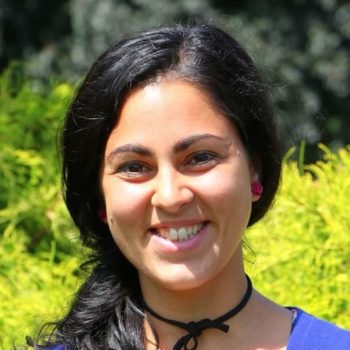
Dr. Melissa Bernardo
Science Faculty
Dr. Melissa Bernardo
Melissa joined Walker’s in 2017 after completing her Ph.D. in Biology from Wesleyan University. Her dissertation dealt with nutrient-mediated manipulation of host-feeding behavior by a parasitoid. Melissa has taught a range of topics at the university level and brings her knowledge and enthusiasm to Walker’s chemistry, biology and environmental science classes. She also coaches volleyball and softball.
Read Full Profile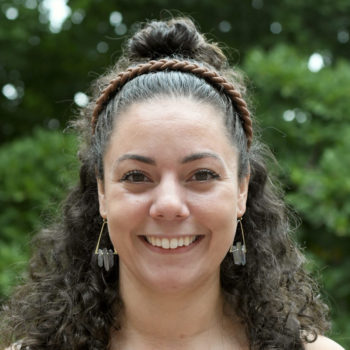
Ashley Bonet
Middle School Science Faculty
Ashley Bonet
After receiving her Master’s in Public Health from the University of Connecticut, Ashley joined Teach for America and taught in Hartford Public Schools for the last eight years as a science and STEM teacher. Ashley also served as science coach for new science teachers and taught science education courses through Teach For America and the John Hopkins Master’s program during this time. She was Teacher of the Year at Kennelly School and served on the Union Board in Hartford for two years. She is very passionate about partnering with the community and organizations to promote STEM education. She participates and encourages students to also be involved in service learning with Knox Community Gardens and the Aloha Foundation as well as works with CCSU, UCONN, TFA, CT Center for Advanced Technology and Manufacturing, LEGO, and Talcott Mountain. She additionally assisted with elementary and middle school running club, girls basketball and softball, after-school science programming, and has helped to organize and run middle school trips to Washington, DC and Vermont. Ashley has also been the STEAM Specialist and Lead Teacher for the Horizons summer program at The Ethel Walker School for the past two summers.
Read Full Profile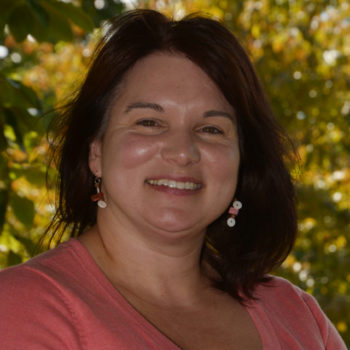
Dr. Suzanne Piela P’22, '28
Science Faculty
Dr. Suzanne Piela P’22, '28
Suzanne joined The Ethel Walker School in the fall of 2007 and since then has taught AP Biology, Advanced Biology, Honors Biology, General Biology, Human Anatomy and Physiology, Honors Biochemistry, Equine Science, and an independent study in Microbiology. Suzanne earned her B.S. in Biology at the University of Notre Dame and her D.V.M. at the University of Minnesota. She also did a small animal internship in medicine, surgery, and emergency medicine at Rowley Memorial Animal Hospital in Springfield, MA.
Suzanne practiced as a small animal veterinarian for 10 years before transitioning to teaching. Prior to her role at Walker’s, she worked as a park naturalist and taught ecology at the elementary level, and worked as a middle and high school science and math tutor.
Suzanne is currently the Science Department Chair, coaches JV Tennis, and loves to ride at Walker’s barn when she has time.
Read Full Profile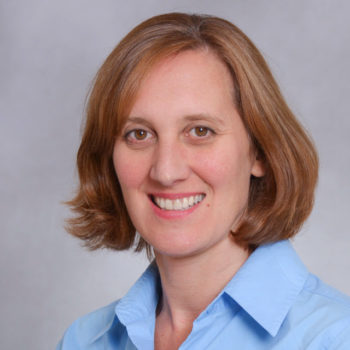
Sandra Quinlan P'16
Chemistry Faculty
Sandra Quinlan P'16
Dr. Julia Sheldon P'20, '23
Science Faculty
Dr. Julia Sheldon P'20, '23
Dr. Julia Sheldon P’20, ’23 began teaching science at Walker’s in 1998. Her childhood fascination with the natural world led her to love science and eventually to pursue a degree in chemistry at the University of California at San Diego. During her time at UCSD, Julia became a certified SCUBA diver and worked in a research lab studying fish physiology at the Scripps Institution of Oceanography. Julia also discovered a passion for teaching through serving as a teaching assistant and mentoring low income, first-generation college students in the Ronald McNair program at UCSD. After college, Julia continued her research and teaching at Yale University, where she earned a Ph.D. in bioorganic chemistry while studying the interactions between DNA and the proteins that begin the cellular process of transcription.
At Walker’s, Julia is passionate about engaging girls in science by encouraging them to observe the environment around them and to explore how science can help them understand and improve their world. A highlight of her career was being named a National Geographic Grosvenor Teacher Fellow, which allowed her to travel on an expedition to the Arctic and develop and teach an interdisciplinary elective course in Arctic Studies at Walker’s. Julia also co-developed and now co-teaches Honors Biochemistry, Walker’s research-based science course that allows girls to search for new antibiotics in response to the worldwide antibiotic resistance crisis. Julia has also held several administrative roles at Walker’s including science department chair and co-dean of faculty, and she currently serves as dean of studies.
Read Full ProfileIn 2019, the Farmington River faced contamination after a fire broke out at Bradley International Airport, requiring the use of a special foam to extinguish the flames. This foam contained…
Added to: Academics, Middle School, Science
Horizons at The Ethel Walker School hosted its annual STEAM Exposition this past Thursday, July 27 at the School's Centennial Center.
Added to: Academics, Arts, Community Partnerships, Math, Middle School, Science, Student Life, Upper School
Walker's Science faculty member Dr. Julia Sheldon has been accepted to the Homeward Bound STEMM Leadership Program.
The Middle School Robotics team competed in the SeaPerch ROV competition on Thursday, March 3, 2022.
Added to: Academics, Middle School, Science