 The Ethel Walker School
News
Blog: Panama Trip 2026
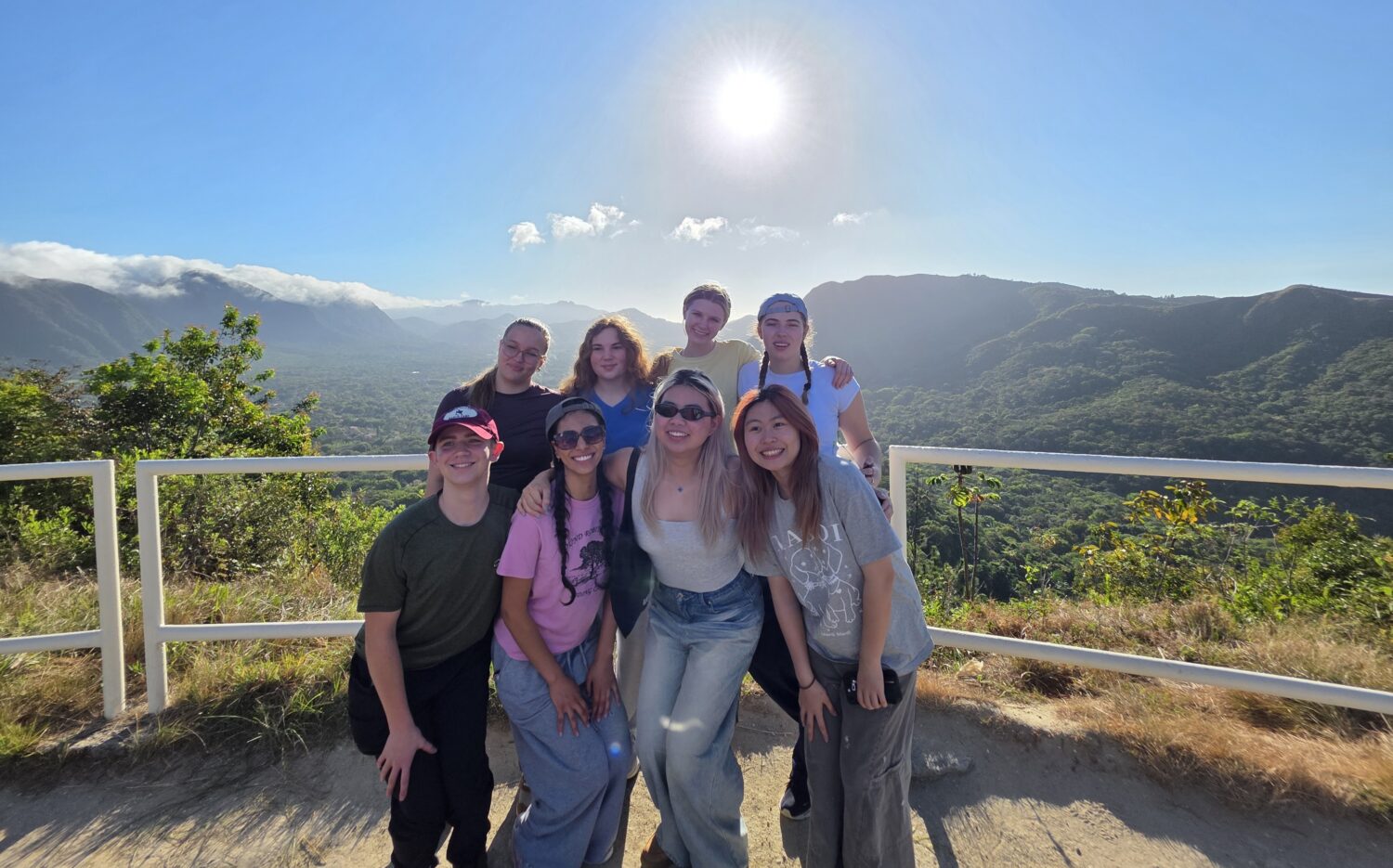
Walker’s is exploring Panama! Follow along for daily updates.
Day 1
The night before departure was full of fun! There were only three of us who slept over in Cluett, so we spent the night together playing board games until we went to bed and then got up at about 3:20 in the morning. Only one of the three of us normally lives in Cluett throughout the school year, so the other two of us set up our own sheets and pillows in two rooms that remain empty in the dorm. Waking up so early certainly felt like a unique, slightly dream-like experience, especially when we boarded the toaster driven by Señora Legassa! We all chatted and slept through the drive to JFK, with one stop to get breakfast at Dunkin’ Donuts.
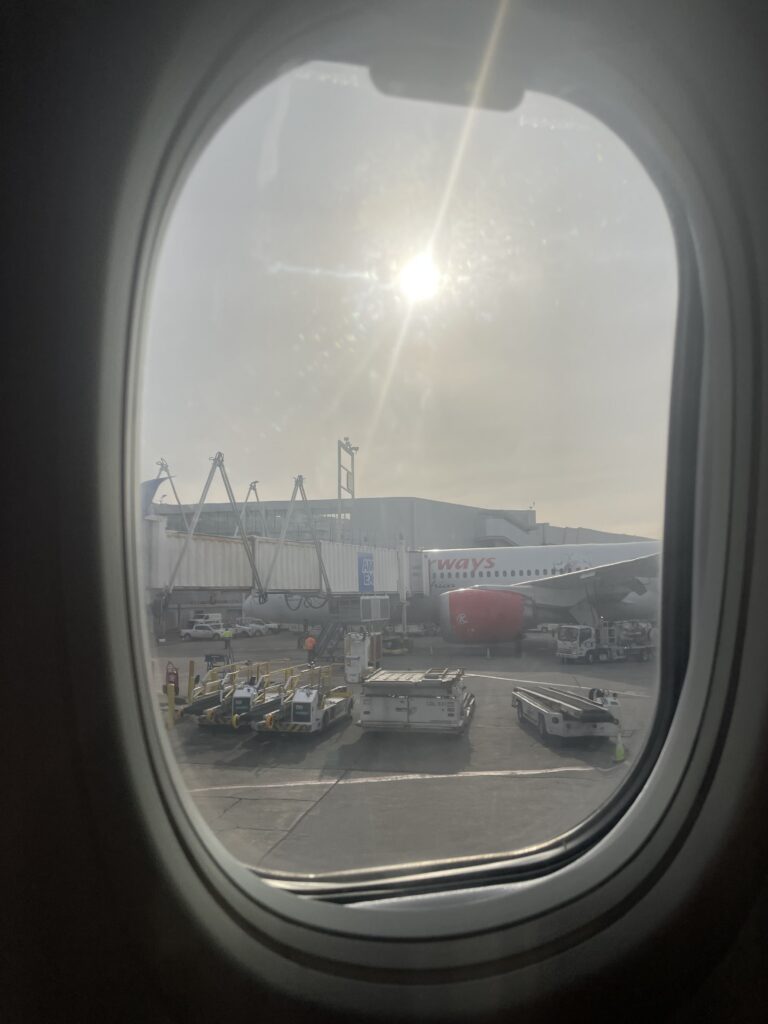
Arriving at the airport made the morning feel suddenly more real. We met up with the other members of the trip and went through the airport security with minimal issues before filling the over five-hour flight with naps, movie watching, and conversing. When we landed in Panama, everyone’s first comment was about the warmth! The weather outside was beautifully sunny, and we were greeted by a friendly tour guide, Manuel, who was waving a sign with our sundial. He and his colleague drove us from the airport to El Valle. During the drive, everyone was excitedly discussing future plans for the trip and noticing the vibrant green foliage that was clearly abundant along the roads. We passed palm trees that swayed in the light breeze and candy-colored houses that displayed their pink, turquoise, or yellow walls to the town. We stopped at Queso Chela about halfway into the journey, and we all chose to snack on delicious, authentic empanadas! Some of the flavors that we got were chicken, cheese, cod, and plantain.
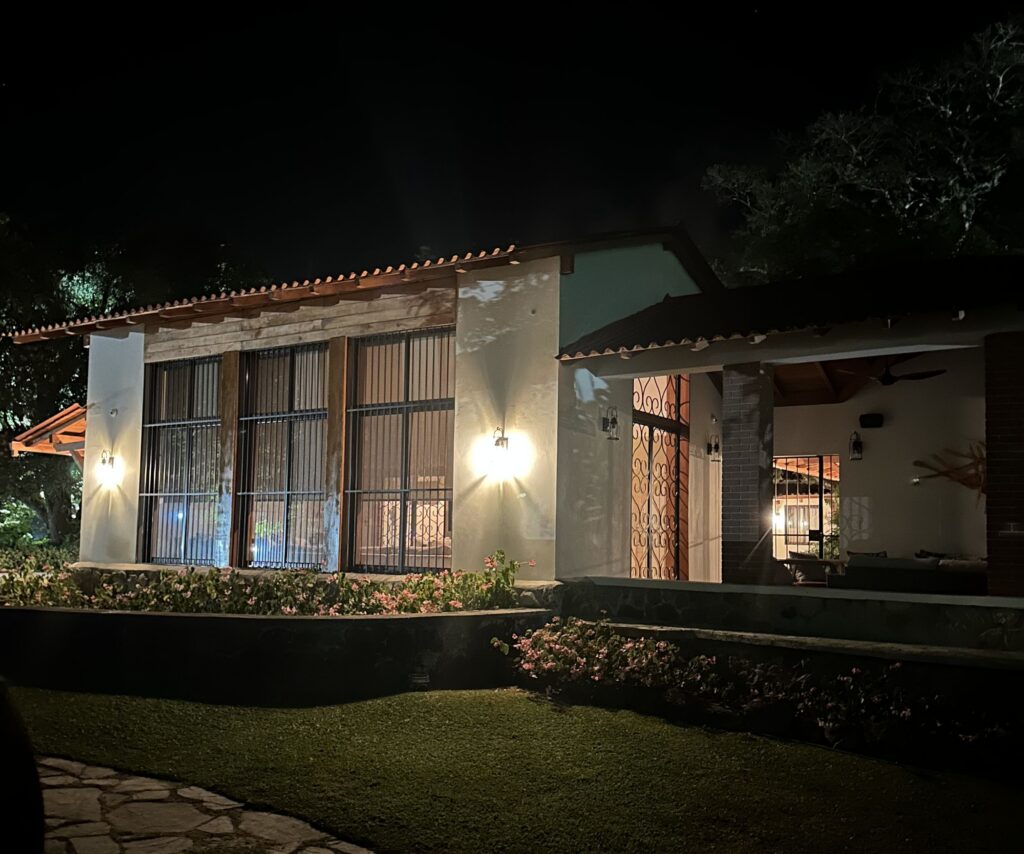
We finally arrived around 6:30 p.m. at Casa Eleta. Casa Eleta is a finca owned by a family whose three daughters attended Walker’s. The Eleta Family invited us to stay in their home during our visit. When we arrived, we were warmly greeted by the Eleta alums’ mother, and the staff who work on the property. The rest of the afternoon was spent settling into our rooms. We had a family-style group dinner, eating spaghetti, meatballs, sweet plantains, and a delicious salad that we thought Dr. B was going to finish on her own! We laughed as we played made-up games at dinner, trying to guess everyone’s middle names. We all hung out in the common space of the “caseta” before heading off to sleep away the busy day.
I was personally most intrigued by how vibrantly green the plant life all appears in Panama. All of us commented on how lovely it was to see, compared to Connecticut’s grey winter. I find that I am very excited to tour the cacao farm in a couple of days, but I know that our earlier plans to go ziplining tomorrow morning will be very fun and exciting as well! Traveling as a group has so far been full of funny moments with big group laughs and collective excitement. I have found it to enhance the experience because we all seem to hold a lot of joy about being on this trip together, but it definitely does not allow for many quiet or slow moments.
— Grace
Day 2
Our first full day in Panama was packed with many adventures! First of all, El Valle is a town within an inactive volcano! There are three volcanoes in Panama and two are active and one is not, and the town or El Valle is situated within it! We started our day bright and early with a delicious breakfast of fresh fruit and scrambled eggs. Our first stop of the day was at Canopy Adventure. Along with four tour guides, we took a zip line tour of the mountain and surrounding woods. The tour consisted of six zip lines that provided a spectacular view. A highlight of this stop was zip line number five, which brought us right above a waterfall! Our tour guides stopped us in the middle of the line to allow us to fully take in the beautiful view, which was much appreciated by everyone. We ended our visit to Canopy Adventure with a swim in a natural swimming pool. Another highlight from our visit were the three sloths we spotted hanging out in some trees!
After a quick stop back at Casa Eleta we were back on the road and heading to Mariposa Butterfly Haven. We spent the rest of the morning walking around an indoor garden, admiring the different types of butterflies. Many of us were lucky enough to have a butterfly land on us! After we were finished walking around, the staff gave a lesson about different types of caterpillars, and we were able to touch some. Then we headed into town for lunch, where we enjoyed delicious food and tropical smoothies, and got to practice our Spanish by ordering. Before we left, we walked through the local market where we enjoyed fresh fruits, and many of us purchased artisanal souvenirs.
Before heading to our next stop, we went to a local cafe where we drank iced beverages. The coffee they serve comes from a coffee farm that the Eleta Family owns. It was delicious! We then drove to Serpentario Maravillas Tropicales, a rescue center for wild animals, mostly reptiles, that were wrongfully purchased to be pets, and now needed help. We got to see many cool animals, including turtles, a crocodile, caymans, different birds, many types of snakes, and a sweet Tayra (ferret-like but bigger). We were even allowed to hold both a little snake and a huge snake!
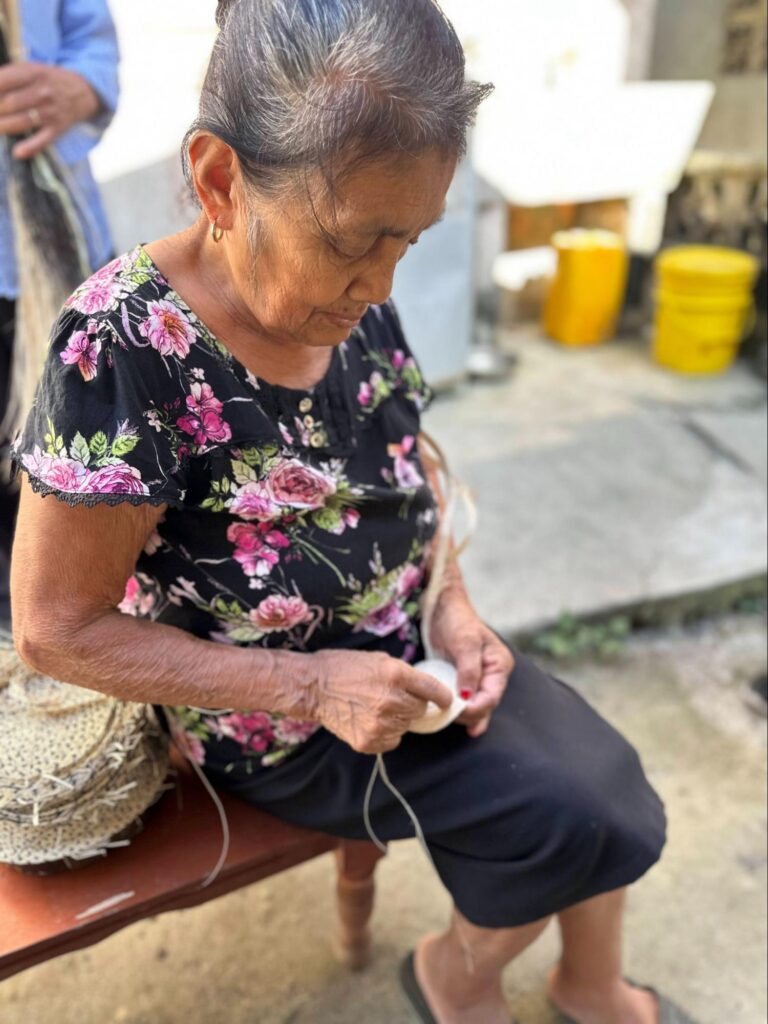
After we stopped back at Casa Eleta, we prepared to head to a local family’s house, where we learned about traditional hat weaving. We learned how the materials for the hats came to be. Plant fibers are boiled and dyed to the desired color before being left out in the sun to dry. We were surprised to learn that one hat could take from a month to a month and a half to finish weaving, depending on the pattern. After the lesson, we hung out with the family members and were given fresh coconuts and bananas to enjoy from their trees. Highlights from this visit were the family dogs, the coconuts, and making a new friend who was the granddaughter of our host!
We ended our busy day with a game of volleyball, which quickly became chaotic in some of the funniest ways. Afterwards, we enjoyed another family-style dinner together. Tonight was a BBQ night! Over dinner, we shared our highlights from the day as well as our plan for tomorrow. So far, we have all loved the spectacular wildlife and weather. We are looking forward to tomorrow’s hike, the visit to GrinBio Farm, and what lies ahead for us later in the week!
— Naomi
day 3
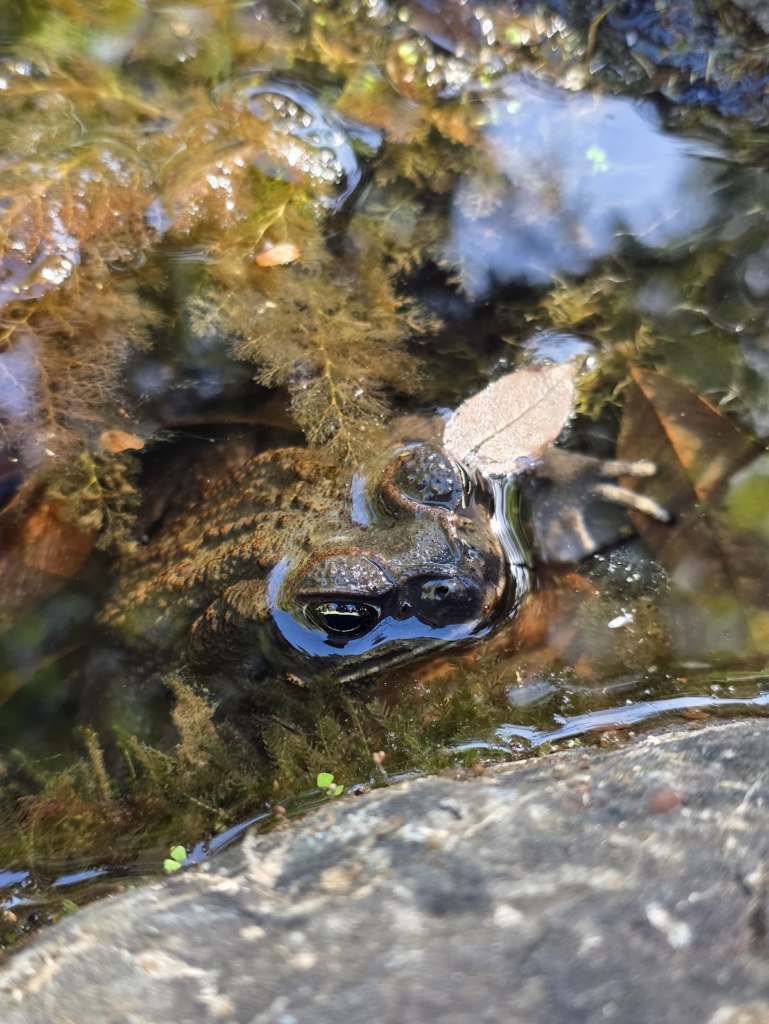
To start out day three, we were greeted by a truck with seating in the bed and a big arched tarp to protect us from the sun. On our way to Chorro el Chivo, we stopped at the Cerro La Cruz, a viewpoint up in the mountains where we looked down to see all of El Valle! After bouncing around and listening to Bad Bunny, we took a quick and very steep hike down to a gorgeous waterfall, Chorro el Chivo, surrounded by a deep natural pool with many smaller waterfalls spilling off of it. A couple of us got in the water, swimming underneath the waterfall and taking turns jumping from its lower ledges. We even encouraged most of the chaperones to join us, Mrs. Paterson and Ms. Ceballos jumped right in! Meanwhile, the rest of the group explored the ecosystem around the pools. They befriended frogs, found new plants, and took tons of photos. We had so much fun playing in the cool water and hanging out in the sun before making the hike back up to our truck.
Heading back to Casa Eleta, we had an incredible lunch — Sancocho, a chicken stew with potatoes, yucca, carrots, and plantains, the food of choice for one of Walker’s alums, Yoli, after she hikes and swims at Chorro el Chivo. Because of our exhausting morning, lunch was fairly quiet as we all dug in. After, we had time to pack up all of our belongings to prepare for our move to Gamboa Rainforest Reserve. Once we were packed, we hopped on a bus to Grinbio Farm.
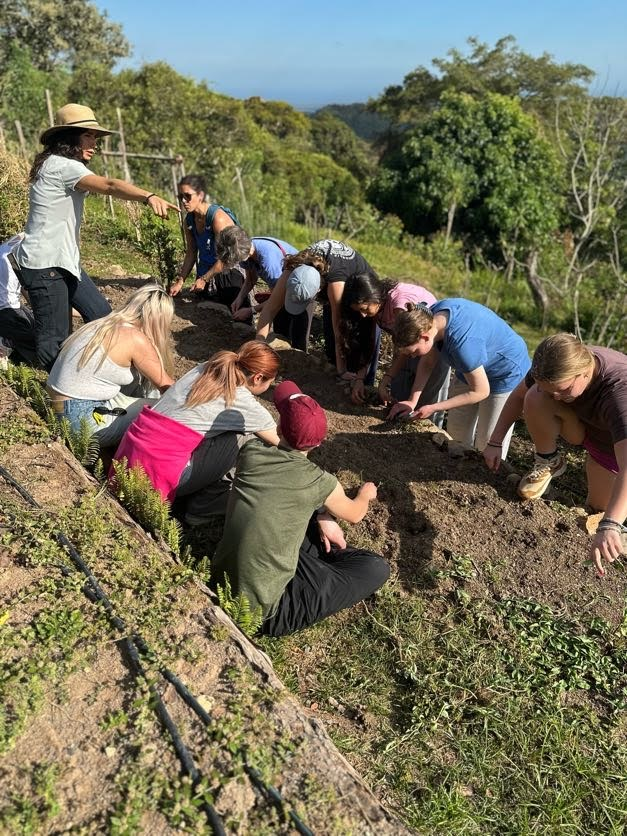
Grinbio is a family-run sustainable agriculture and ecotourism farm that recycles all of its waste back into the farming process. The farm is home to many sheep, chickens, dogs, and a horse. On top of all the animals, they plant and maintain many crops, including many regional herbs and the ‘three sisters’: corn, beans, and squash/pumpkins. These crops work together and create the perfect environment for each of them to grow. We helped start this process by weeding, plowing, and then planting red corn seeds in one of their garden beds. Before that, we received a tour of the facility from one of the owners, Diane. The first stop was feeding the sheep, who were impatiently baa-ing during our entire introduction. We fed them thick stalks of grass and false sunflowers. They would leap over and on top of each other, looking for the best stalk of food. Next, our winding tour allowed us to try Java apples (a group favorite), raw cacao, and coffee fruit. We learned about superfoods and each fruit’s health properties as we saw mangos, guanabanas, and papayas growing. We also learned what plants are native to Panama, and were shocked by just how big soursop (guanabanas) can get. We then met their 80 chickens and learned that every chicken knows to come back at night because it is a safe space from predators. We even got to see how Igor, the family’s German Shepherd, would herd the chickens back into their coop. Our tour ended at the gardens, where Diane introduced us to many herbs. She had us smell them and taught us about their health benefits.
After both the tour and gardening, Diane welcomed us onto the porch of her home, where we enjoyed an afternoon snack of agua de sapo (ginger lemonade made with sugar cane), fresh papaya and pineapple with passion fruit, delicious banana bread, and slices of olive and cheese bread that her husband had just taken out of the oven. While eating, we met her 9-year-old son, who hung out with us and talked about his life.
To end our day, we had a long bus ride to Gamboa, where almost everyone fell asleep. Dinner was a lovely buffet-style dinner at the resort. We decided to sit in our “assigned-unassigned spots” and talked and laughed about our day, just like we had been the previous nights. We then finally retired to our rooms. It was a super fun and educational day, and everyone had a different highlight of what they learned at Grinbio. Common answers included how the farm was able to be very self-sufficient, a plant we learned about that is being studied as it can cure cancer cells, and learning about how the chocolate and coffee-making process works. We can’t wait for tomorrow!
— Piper
day 4
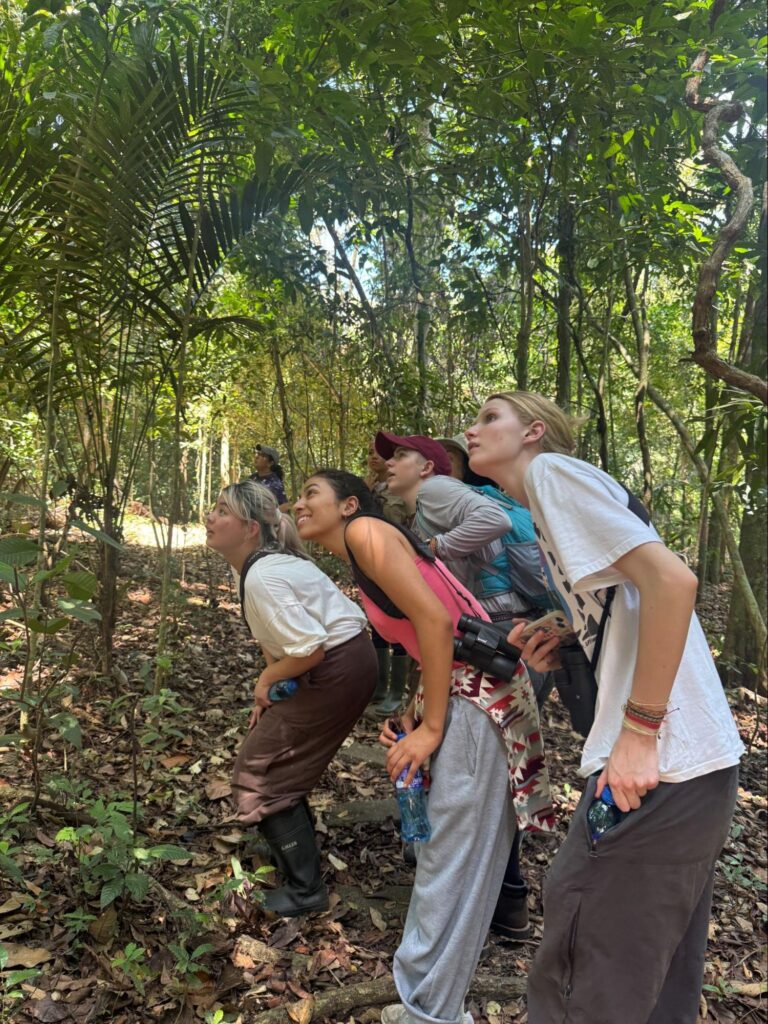
A few days into our trip, and the pace certainly hasn’t slowed down! We had another early start, though thankfully not quite as early as our travel day. We left the Gamboa Reserve at 6:30 a.m. to catch a ferry to Barro Colorado Island departing at 6:50 a.m. to join scientists at the Smithsonian Research Institute. The very early departure made for a slightly chaotic and groggy beginning to the day. We planned to eat breakfast on the island, so I think everyone was definitely feeling it as we boarded the boat. Once we got to the island, we discovered that there was no food for us, but our amazing chaperones worked their magic and arranged for the kitchen to prepare food for us. That meal felt especially appreciated, and it was one of those times that the simplest meal tasted disproportionately delicious.
After eating, we set out on a hike that ended up being both challenging and incredibly rewarding. Our Smithsonian guides were Chelina, who has been partnering with the Smithsonian Panama for over 20 years, and Ariana, who was newer and this was her first group in English! The trail was about two miles long, but the heat and humidity made it feel much longer. Still, the wildlife we encountered along the way kept everyone energized and excited. One of the highlights were the howler monkeys (that we heard before we saw), which Grace spotted first. Not only were they fascinating to watch, but we also learned that they had been on Dr. Bernardo’s bucket list, which made the moment feel even more special. Even more exciting was watching baby howler monkeys clinging to their mothers, which made the whole group stop and stare quietly for a while.
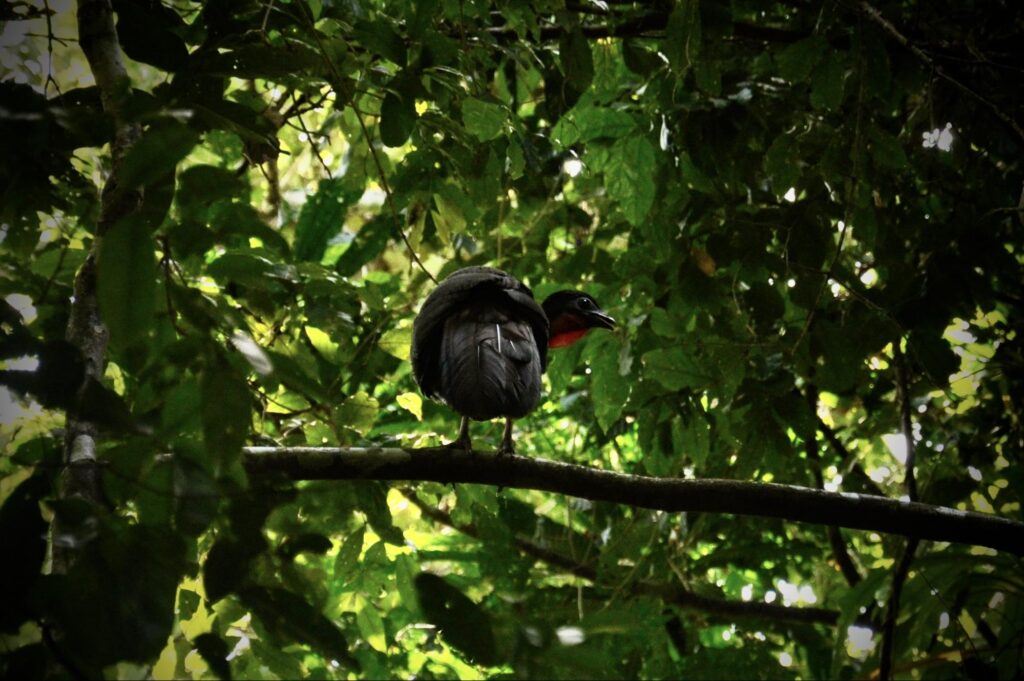
We also saw an agouti scurrying through the underbrush, as well as several golden orb weavers, which are my third favorite type of spider! Their intricate webs stretched between trees and shimmered in the light, making them hard to miss once you started looking for them. High in the trees, I also spotted crested guans, a type of bird that is becoming more prevalent on Barro Colorado Island due to the lack of poachers and the protection of the research institute. Altogether, the hike pushed us physically, but it felt completely worth it because of how much we were able to observe and learn.
After lunch, the day shifted from physical activity to something more academic. We met with Benito, a scholar from St. Andrew’s, who studies katydids. He talked to us about polymorphism, which is when individuals within the same species have noticeably different physical traits, such as the difference in color seen in katydids, despite being the same species. It was really interesting to hear how this applies to katydids and how these differences can affect their survival. We were able to ask a lot of questions, and it was one of those rare opportunities to engage with someone actively doing research in the field.
Later that evening, we went on a night drive, which had a completely different atmosphere from the daytime hike. Everything felt quieter and cooler. Among other animals, the biggest sighting of the night was a capybara, which none of us were expecting to see. It was a brief sighting, but definitely memorable.
To end the day, Ms. Ceballos told us a bedtime story about La Llorona, or La Tulivieja in Panama, a local legend. Sitting together and listening to the story after such a full day was the perfect way to wind down. The mix of early mornings, fascinating wildlife, and meaningful conversations is definitely making this trip feel both intense and incredibly rewarding. I am very excited to see what tomorrow has in store for us!
— Addax
day 5
“I want to make best friends with the birds.” Naomi told us her goal today on our way to the pipeline walk in Gamboa.
Near the Gamboa Rainforest Reserve is the pipeline trail where we climbed the tower and then hiked to the hummingbirds station and even discovered bats underneath the floor boards of the station. While ascending the stairs and viewing the beautiful scenery, we were all reminded of the knowledge we learned yesterday from BCI and it felt like we were living among the growing trees. Seeing yellow-headed caracara, hummingbirds, king birds, different motmots, butterflies, insects, and bats really demonstrated the biodiversity in this rainforest. Our lovely guide told us that smaller birds are not easy to find and sometimes underrated and often overlooked, but they are so colorful, unique, and they make so many different sounds. She mimicked bird whistle sound and, miraculously, a bird whistled back like in a Disney movie. Thanks to Dr. B’s binoculars, we got to see their unique patterns closely and observe them. We got so caught up in birdwatching that we lost track of the time and eventually ended our hike reluctantly.
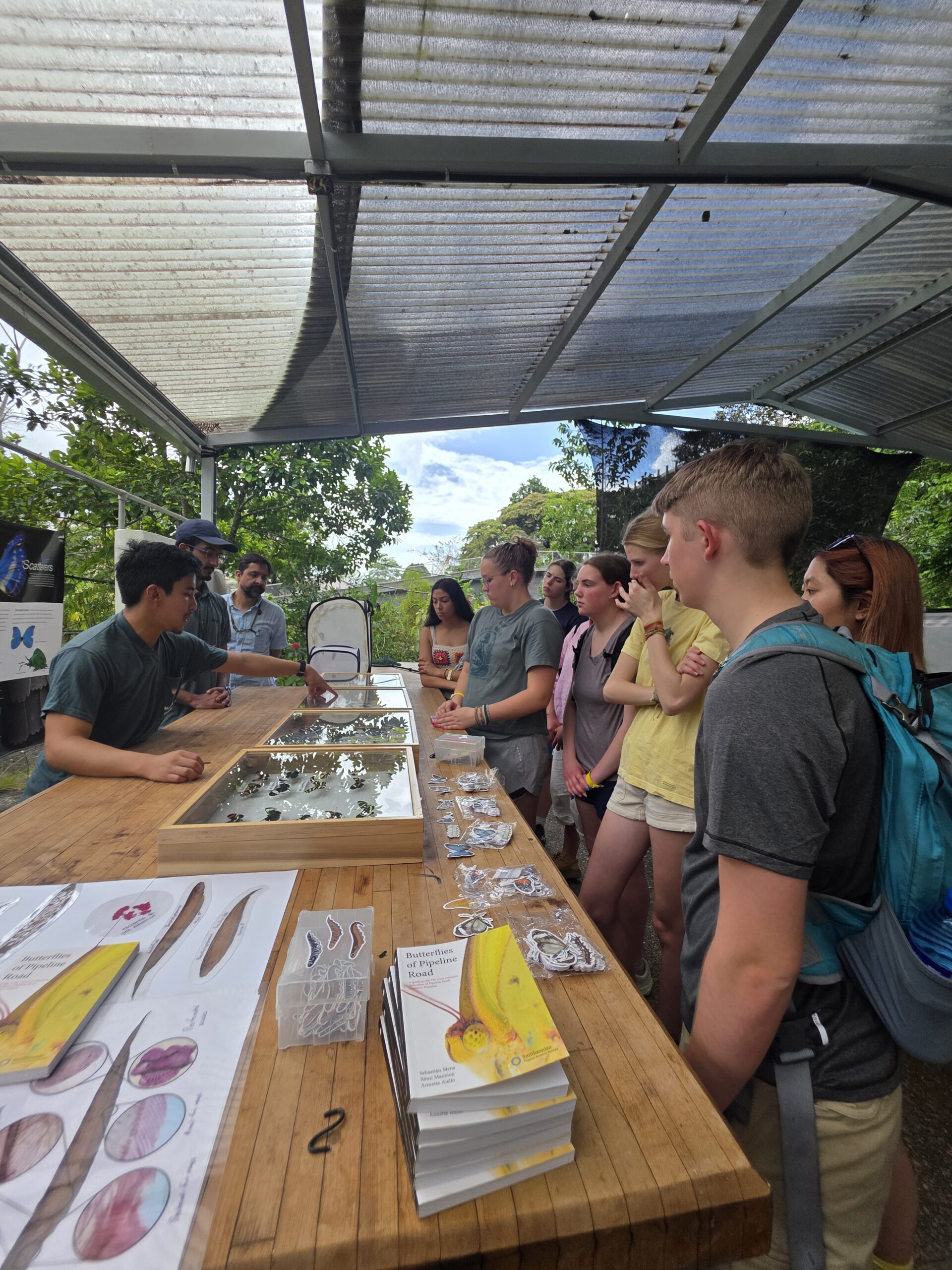
Later in the morning, we went to the Smithsonian Tropical Research Institute right in Gamboa to explore the research projects on butterflies with scientist Dr. Owen McMillan, who is very interested in the origins and genetic basis of adaptive variation in the butterflies. He and his collegues presented and taught us the logic of butterfly morphology, how they have different colors due to pigments and structures, their genetics, how they developed the patterns during growth and why they might have those bright colors due to natural selection, and their anatomy, how some butterflies have brain parts larger than that of others to allow them to forage pollens better. Some other projects also include researching the chemical caterpillars produce to protect themselves, and electric fish that communicate and forage using electrical signals. Before we left, we took a group selfie in the gorgeous butterfly garden the researchers curated and had the great opportunity to hold the butterflies in our hands.
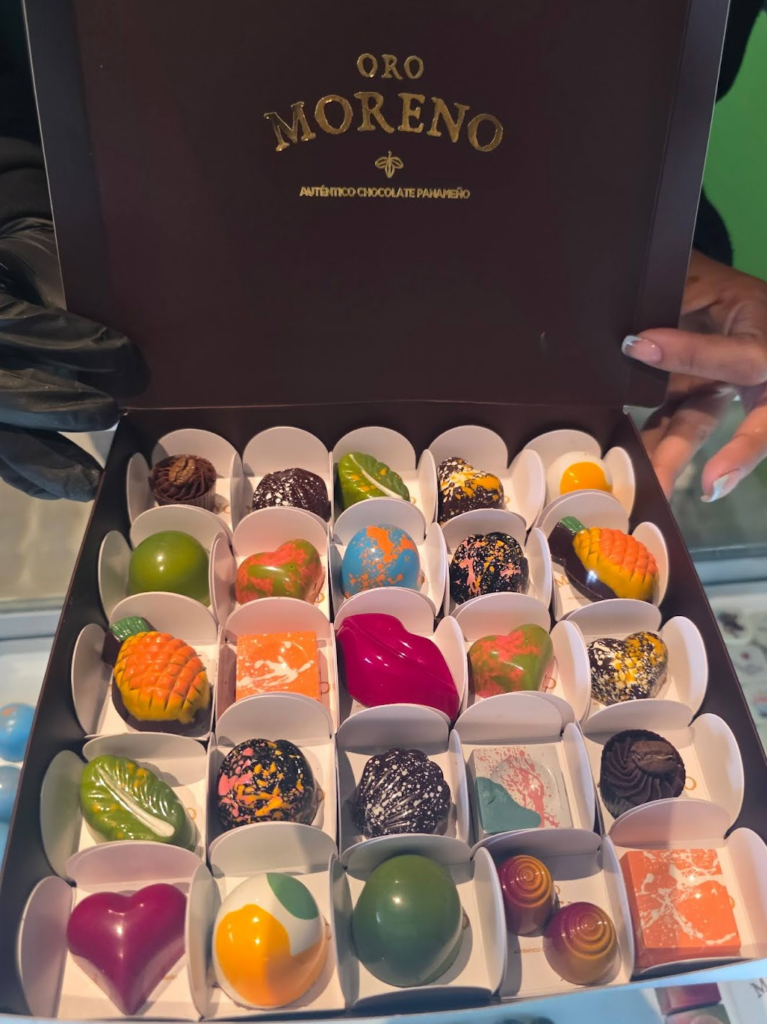
Our last meal in Gamboa was the delicious lunch in the Rainforest resort, where Naomi again expressed how much she loved the “nut pie” (a pecan pie) dessert and ate three of them, followed by a drive into Panama City — our last destination. Before we checked into the hotel, we stopped at the chocolate factory Oro Moreno, the first chocolate factory and currently the biggest in the country. Interestingly, it’s also run by an all-female team. We were introduced to how the chocolate was made from harvesting the cocoa fruit to fermentation and separating the shells and beans, and creating cocoa butter and sugar. My favorite part of this visit was that we got to try the 70% dark chocolate when it was still in the giant pot, mixing. They are supposed to be stirred for 72 hours to fully mix the sugar, cocoa, and cocoa butter, so w as we tried it mid way into its process, we could still taste the texture of the sugar inside. After they are cooled, they are molded into different shapes and colors such as butterflies, lips, pineapples, flowers, etc. it was surprising to learn that they hand paint all the colorful chocolates. The staff in the factory are very nice; they gave us gift chocolates, offered us to try different chocolates, and even the opportunity to try piping one of their chocolates with a coconut curry filling. We all were amazed by the process and how delicious the chocolates were and it resulted in buying so much chocolate that we didn’t even know if our suitcases could handle the amount!
We ended this day with dinner with an alum who told us about her experiences of teaching and living in Panama. She recommended many places to go in Panama and joined our cute game: Popsicle, Poopsicle, Pwincess, and Popcorn! So excited to keep exploring Panama city and many museums tomorrow!!!
— Candy
day 6
Walking in the rainforest and on top of a mountain in Panama let us get to know her by actually seeing her and feeling her. But today, by spending a day visiting three museums and learning about her past and future, we got to know her culture and the people inside her. This is how we are forming our connection with her—not only physically but also emotionally.
A nice sleep-in with some fresh pineapple and yogurt opened my day. The food in Panama had always been my favourite part of the trip. Words cannot describe how excited I was for every meal we had. Then, after a 15-minute bus ride, we stopped at a colorful and modern-looking building that we later learned was called Biomuseo. Facing the Pacific Ocean, Biomuseo looks like different geometric shapes stacked on top of one another, forming a tent-like building. The museum was designed by world-renowned architect Frank Gehry, and this is his first work in Latin America. The vibrant colors of the museum symbolize the incredible abundance of animal life in Panama, and the entire museum is dedicated to showing and teaching more people about biodiversity and the biogeography of the country. Walking along the entrance corridor felt like traveling back in time, starting from 70 million years ago. Surprisingly, at the time, Panama was still a piece of land covered by the ocean. Then, through the collision of tectonic plates, the process caused the underwater volcanoes to form and eventually rise above the sea level as islands. Over time, tectonic uplift pushed more of the seafloor upward and eventually formed the Isthmus of Panama. This geological process had an enormous impact on biodiversity, leading to the Great American Biotic Interchange, which allowed wildlife to migrate between South and North America, and changed the ecological environment and animal communities forever.
I’ve always thought that the shape of Panama looks like a slender bridge, but actually learning about the land and its world-changing impact made me respect it so much more deeply. Later, we grabbed a quick lunch at the museum café. It was my first time trying a fish empanada; the fish stuffing inside has an interesting curry flavor, and it was definitely worth trying. (even though I have to say my favourite empanada so far is still the one with queso, cheese, that we grabbed the first day on the way to El Valle).
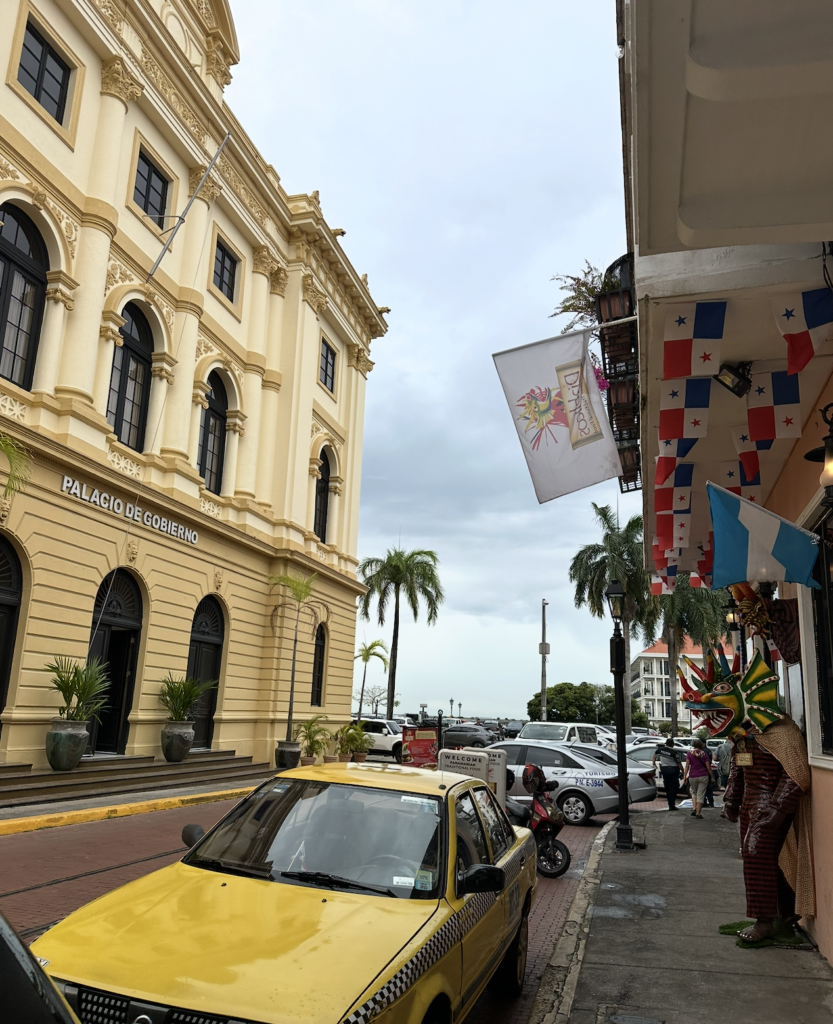
Later in the afternoon, we visited the Panama Canal Museum in the middle of Casco Viejo — the historic district of Panama City and also a UNESCO World Heritage Site. Spread across three floors, the museum explores different themes about the history of Panama. We got to take a closer look at the Panama Canal in its various stages, from the early French construction attempt to the later construction by the United States, while eventually transferring to Panamanian control. A special exhibition currently on view is “El jardín de Mr. Brown” (The Garden of Mr. Brown), which tells a story of a man who lived right next to the canal and maintained a garden full of fruits and herbs dedicated to feeding the animals that had lost their home because of the development around the canal zone. For me, the curation of this exhibition was a perfect example of how strong graphic design, site planning, and layout can complement the story of an exhibition itself. The sequence of photographs, the color, and even the lighting all became part of the storytelling, interacting with people in a way that helped the story express itself more fully while making the audience feel comfortable and engaged. Moreover, we got to watch a 20-minute short film about him and the work that he had devoted his life to. Our dearest Anselmo González Brown (Mr. Brown), after decades of planting and gardening for a better planet and the well-being of nature, peacefully passed away in 2025, surrounded by his children. “He reminds me of my grandpa,” Naomi B. said, “His story really touched me.”
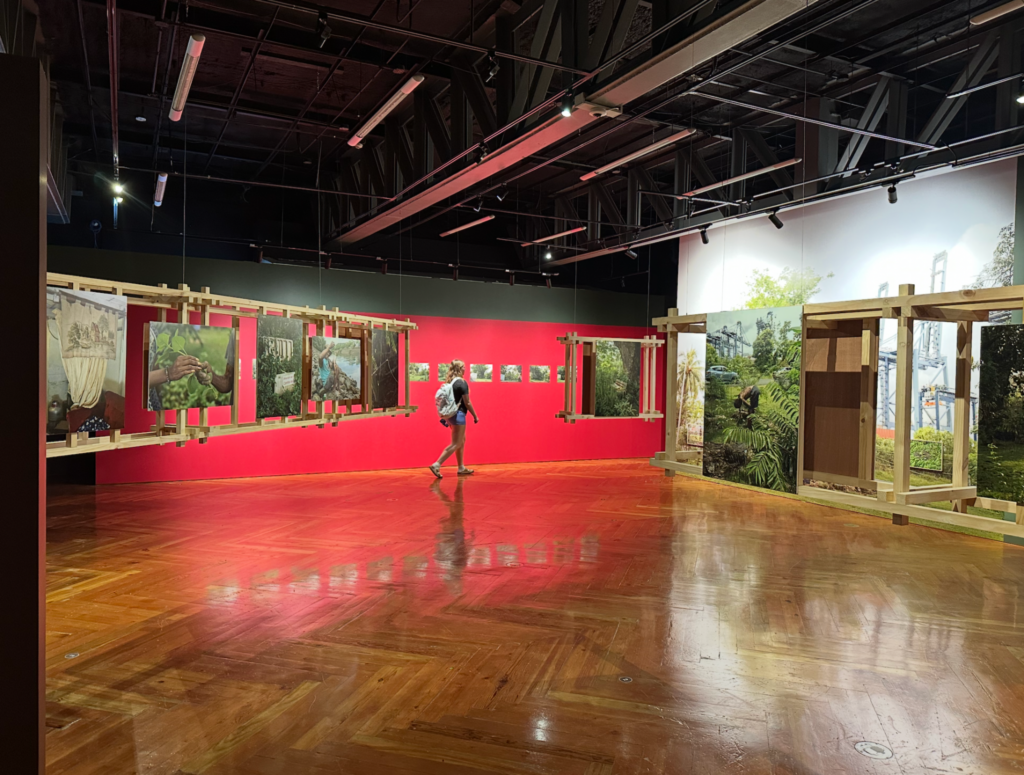
The life of Mr. Brown had really started to make us think. Think about the courage it takes to stand on your ground doing what you believe is right, even when your own children think you should stop and go to the city for a better and more comfortable life. “You can never force a person to do something that you think that’s ‘right’ for them,” said Mr. Brown, “people know what they want, and they know what is truly the best for them.” Then he laughed at the camera. “So let it be,” he said. Mr. Brown’s life philosophy felt like a morning star to me, points out a bright path, and encourages me to do what I believe is right.
We stayed in the museum café a bit longer after the visit and had a delightful afternoon tea because of the rain. We got chai with warm lemon cake. Later, we visited Museo de la Mola. The museum was created to provide a space to appreciate traditional Panamanian culture and art. We spent the rest of the afternoon in the old town, walking around to get some special gifts for our loved ones. Then we went to a very special restaurant where I tried some incredible Panamanian food. I really enjoyed their special poke bowl, pickled vegetables, meat-bean paste, tuna with crackers, and a whole grilled fish. After dinner, we got gelato, and the lime with supermint was so so so refreshing, just like a cool wind from the shore.
As Kelty said, “Every day we said, ‘this is the best day of my life’, and then we realized that every day in Panama has been so much fun, and every day is the best day.” Now blogging the day from my computer, I can’t wait to go to bed, then open my eyes and embrace the next day in Panama — another day full of happiness, laughter, and unforgettable memories.
— Kate
day 7
Today, we had our second to last day in Panama together. We ate breakfast at the hotel before departing for Punta Culebra, known as a nature center, where we saw many animals, including sloths. There were ruins of a hospital for yellow fever and malaria during the construction of the Panama Canal. We finally saw the Panamanian golden frog that we had seen in so many other places: in the chocolate at Oro Moreno, stuffed animals within souvenir shops in Panama City, and in all of the handmade mementos in El Valle. A few of us were able to feed the frogs by tapping fruit flies out of a plastic container. Something most guests don’t get to do. We watched the frogs jump a few inches at a time to eat them. Piper and Grace commented on how ironic it was to feed the frogs the flies they work with at school. Naomi loves sharks and was beyond pleasantly surprised that they were at the nature center. We learned about turtles, and I found it crazy to imagine living to 200 years old, waiting until age 20-30 to reproduce, but having the large possibility that none of the eggs would survive the journey to the water. We then walked over to have an early lunch at Mi Ranchito.
What I most want to remember from today was our time at the beach.
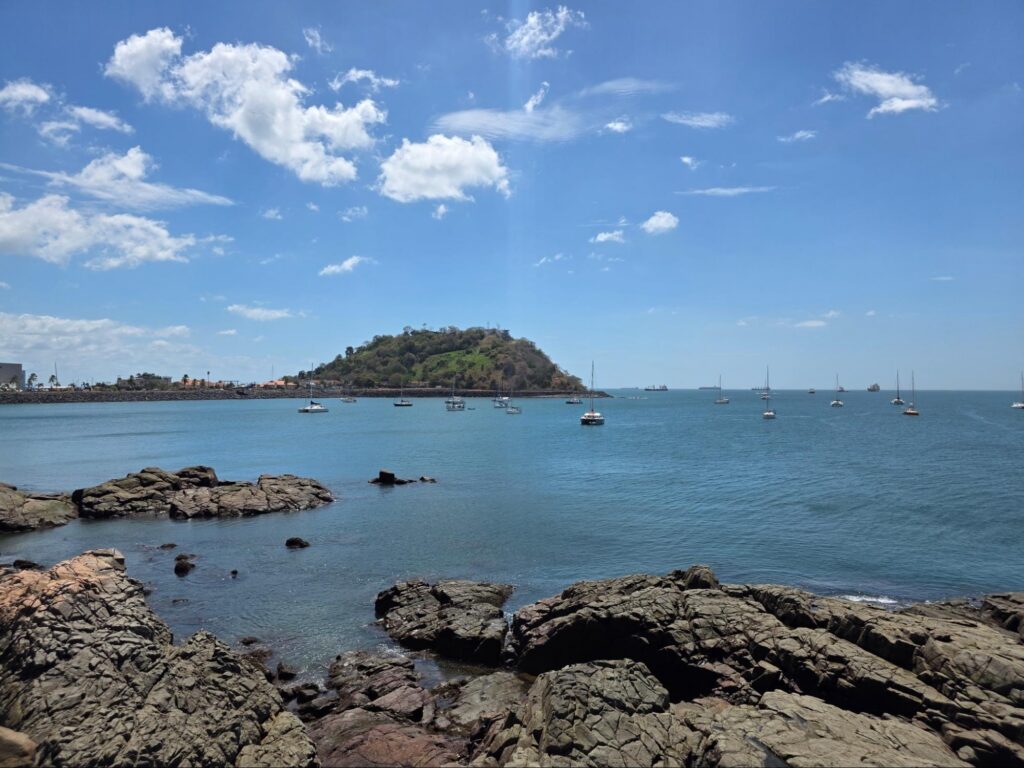
As we drove to the beach, over the canal via the bridge of the Americas in the bus that had carried us from place to place, dropped us off in the tired evenings, and picked us up again in the bright mornings, I thought about how perfect it was for us to go to the beach today. As the days have gone on, our skin golden from the heavy sun and our eyes more tired from the early mornings. This was going to give us a moment to pause. A moment to rest our tired feet from hiking and our tired minds from learning and exploring.
For the most part, that was how our beach experience was. We lay in the sun, sweat dripping through our hair, dipping back into the warm Caribbean ocean when we got too warm, reading our books out loud to each other, and walking along the beach discussing the seashells as we collected them in our palms. But then some things didn’t feel as relaxing as we had imagined. Isla and Piper encountered some jellyfish, we learned from Google, most likely from an invisible jellyfish. We tried to swim further, get to deeper water, but the deep, dark clay still kept the creatures close to our bodies as we tried to swim above. Because this was a last minute addition to our plans, we didn’t have towels, so some of us used the tiny towels Ms. Paterson kindly gave us to dry off after our swim on our first full day, some of us used t-shirts or sweaters, but others went all in, accepting that the beach would be lifted up with them when they stood. I had fallen asleep, face-side down, and unknowingly gotten a thick layer of sand on my cheek. Dipping back into the water that we knew had critters ready to protect their space was a little scary, but we rinsed off, helped each other get sand off our shoulders and legs.
There is something so “us” about the imperfections of our beach day today, something so meaningful about how the memories we are making are far from basic or expected. As we walked back to the bus, we were hot, sweaty, sunburnt, stung, and tired, but content. Kate was only able to get her toes in her Ugg shoes, so she hobbled to the bus on high heels, smiling. It is this exact feeling, this discomfort, this less-than-ideal end to our time at the beach, and other moments like it, that have made this trip so special, made us such a close group, and made our ribs hurt from laughter at the end of our long days in Panama.
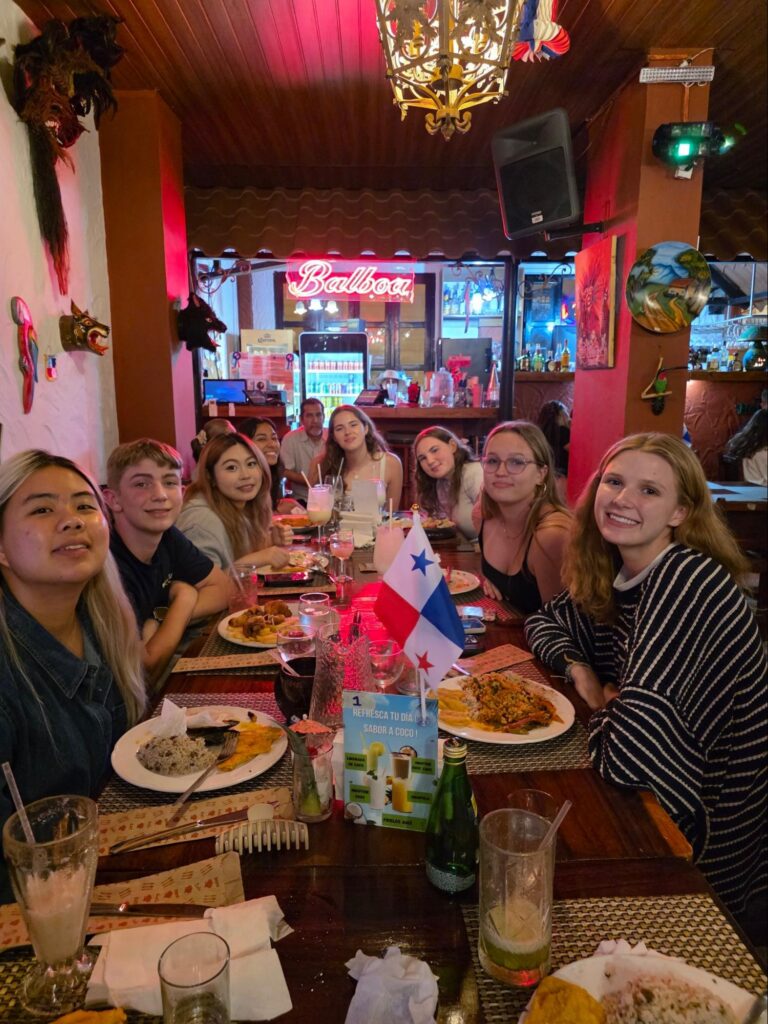
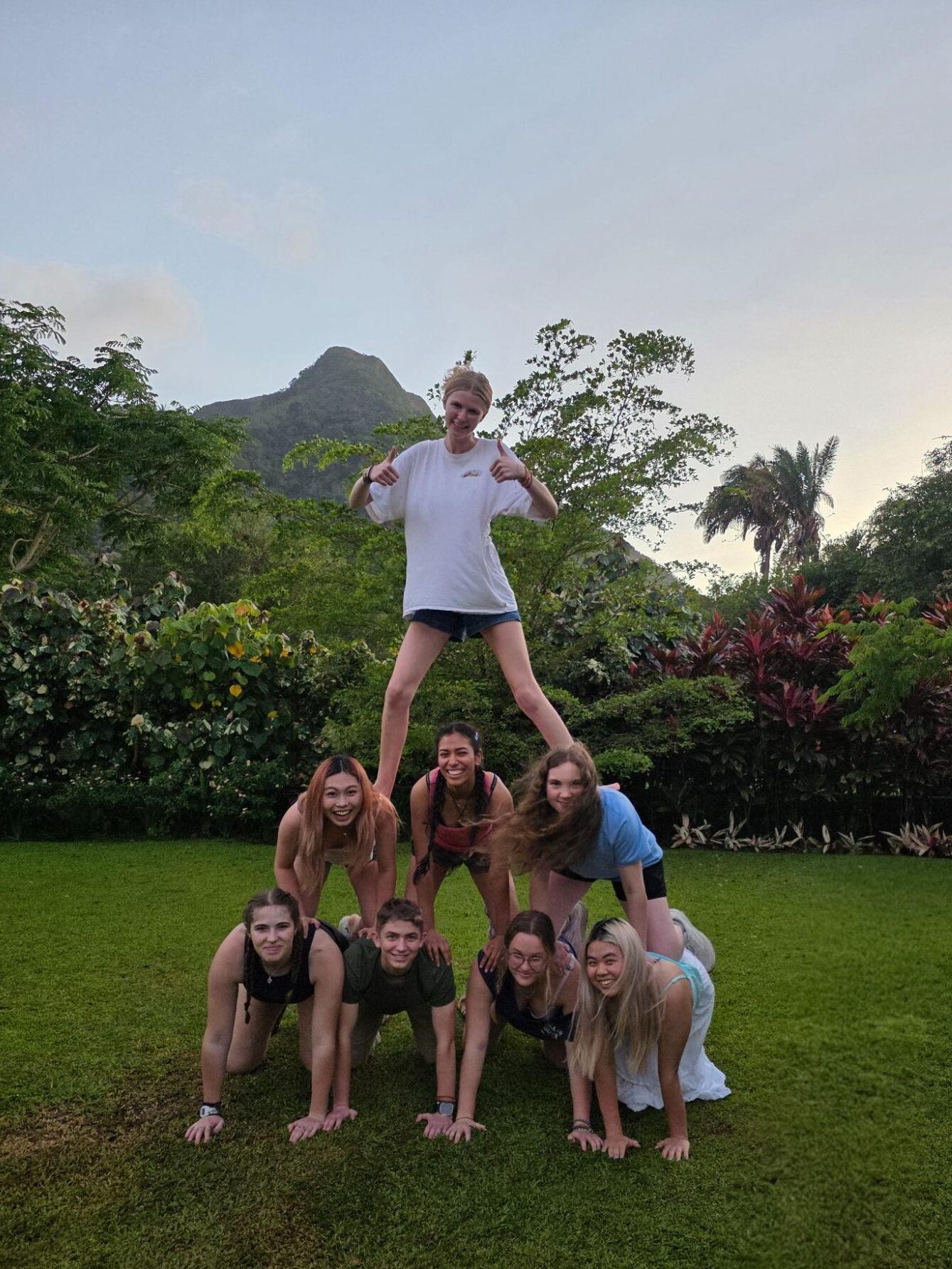
Upon arriving at the hotel, most of us got ready to jump in the pool and enjoy some fresh water time. We laughed so much, especially after mastering the three-person stack! One by one, we began to make our way back to the rooms to get ready for the dinner and the show. We got to the restaurant Diablicos, a traditional Panamanian restaurant, and after ordering our meals, the music became louder, and an MC came down the stairs. He welcomed us all and explained that we were going to get to know a bit more about the Panamanian culture through the dancing and the traditional clothing, particularly the Pollera (the blouse and skirt the women wear). The dancing was so fun, and we even got to get up and dance with everyone. A special and funny moment was when Piper fully embraced the experience and yelled into the mic with the MC, “OJUE.” We then walked to one of the town squares and enjoyed delicious churros! Another long but wonderful day in Panama.
— Kelty
day 8
A Panamazing End!
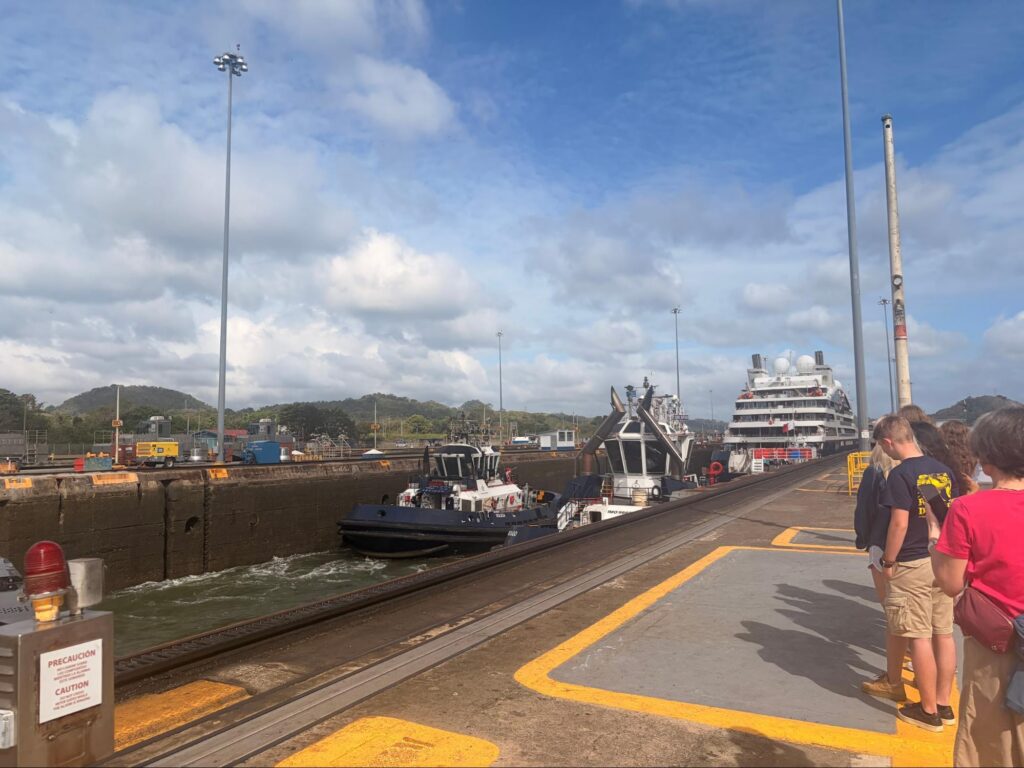
Our last day in Panama started with an early breakfast, and my recent staple: mini pancakes slathered in Nutella. We then climbed aboard our van and headed to El Canal de Panama, which is unrivaled in its economic and water resource management benefits for the country. We were lucky enough to receive a private tour of the facility, including an up-close, personal view of a passenger ship passing through the Canal. In addition to that VIP treatment, we were also lucky enough to experience a presentation on the history and development of the canal by the Panamá Canal Authority Deputy Administrator (second in command) and the Canal’s first Chief Sustainability Officer, Ilya Espino de Marotta. Ilya also shared the journey of her career, being a woman in command within a male-dominated field, and parts of her personal life. She reminded us that all things are possible with a team that supports each other, and it doesn’t always have to be about work; play is essential!
We learned how the Canal acts as a critical artery for global trade, generating significant revenue for Panama. The history of the Canal is complex and riddled with mistakes, but now that it’s here and under the management of the Panamanian people, it has proven to be a worthwhile investment, despite its complicated process. While container ships make up the majority of the boats passing through the Canal, tankers, passenger boats, and vehicle shippers are some of the other vessels that frequent the Canal. Meeting Ilya and witnessing a ship go by contributed significantly to our wonderful time this morning. The visit was wrapped up by a 3D IMAX film about the canal narrated by Morgan Freeman.
From there, we headed to the Museum of Contemporary Art (MAC), which featured work from the artist Trixie Briceño, a British-Panamanian painter. Briceño grew up in a variety of places, including London, China, and Japan. She took her place among the first women artists to display their work in Panama, and continued exhibiting even after she moved to Arizona in the 1970s. Briceños style focuses on the use of bright and vivid colors that depict scenes of “surrealistic tendencies and politically-engaged subject matter.” After leaving the museum, we made our way to Casco Viejo, or Casco Antigua, both names displayed throughout the area of the city. In the center of the city, we had about an hour and a half to have lunch, shop around, and say goodbye to the colonial town. We then headed back to the hotel with sufficient time to get ready for the evening, and everyone was excited for dinner to roll around!
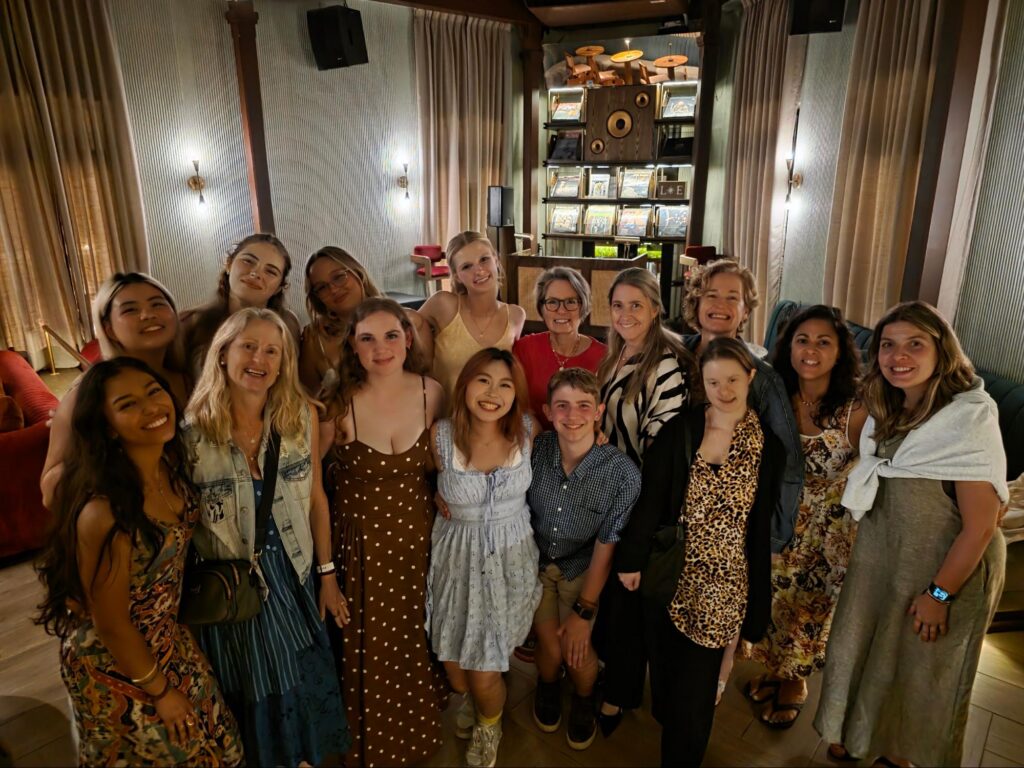
Arriving at the restaurant, La Estrella, we met up with three alumnae who currently reside in Panama, two of whom were the Eleta sisters, the owners of Casa Eleta, the villa we stayed at in El Valle. We had great conversations about life after Walker’s, swapped stories about campus life and our personal experiences, and got a sense of the community and network of individuals waiting for us after we graduate! Yoli and Ximena recounted their time touring different boarding schools, and what they were like in comparison to Ethel Walker, which then prompted several of us to share our own journeys. Alexandra divulged the details of her academic pursuits after graduation, and how that led to where she is now, working in business at her family’s company. We ended the gathering with the alumnae by dancing salsa after Ximena taught us some steps.
All in all, we had an incredible last day, one that reflected the equally incredible week we were fortunate enough to experience! We couldn’t be more thankful to everyone who made this trip possible, the work put into every last scheduling detail, and the effort made so that each one of us will remember this trip for years to come. Thank you to Dr. B, Ms. Ceballos, and Ms. Patterson for sticking with us through highs and lows, and for being the most understanding, flexible, and supportive chaperones! Panamá 2026, ¿qué xopá?
— Isla
Reflections
Isla: This trip was a huge learning experience for me, but more than that, it provided me with a unique opportunity to explore a new country! Immersing ourselves in the cultural, environmental and educational aspects of Panama has been so incredible, and unlike any other trip I’ve taken.
Kelty: I am so grateful for this opportunity to travel to Panama with Walker’s. It made me realize what true close friendship is like. I learned how important it is to ask questions to alums and teachers about anything and everything when the opportunity arises. Yet, I think what I learned that will stay with me more than anything, is to allow myself to experience things to the fullest, as this trip, the conversations I had, the happenings in the rainforest I wouldn’t be able to understand in a lifetime are things I will never be able to replicate.
Naomi: This trip has been one of the best experiences I have had at Walker’s. Getting to experience a new country that is so rich in culture has been so rewarding. Getting to visit so many areas of Panama, museums, and restaurants made this trip unforgettable!
Candy: The trip seemed so long but so short. We went to many labs, forests, and museums to discover biodiversity and history, and we had so many fun activities to bond and get to know each other even more. It was a pleasure to be on such a Panamazing trip with the caring and supportive chaperones and this group of friends.
Addax: I genuinely had the best learning experiences of my life on this trip. All of the sciences were everything I hoped they would be and more, and it was so fun learning about Panamanian history and culture while immersing myself in the Spanish language to improve my skills. I would absolutely love to do this trip again, and I 100% recommend any Walker’s student that is even considering signing up should go on the next ones.
Kate: The Panama trip is such a packed but fun and very inspiring trip for me! We learned so much about biodiversity and the traditional culture in Panama, and we also got to taste different local cuisines. Being actually close and learning about each other is not the only best thing happening during the trip, we also got the opportunity to talk and ordering food in Spanish and learning with the group of the coolest scientists in the world and learning about the projects that they are currently working on (which even makes me wanna study biology in the future…). I’m very thankful for this opportunity and I’ll always remember all the good times we had in Panamá!
Grace: Traveling to Panama was the most unique and educational trip I have experienced. Having the privilege to learn so much about the biodiversity, culture, and history of Panama from such a first hand perspective was incredible, especially because of being able to meet scientists in active study, women in positions of global power, and Panamanian citizens that taught us endlessly about the country. Being given such an abundant opportunity to practice the Spanish language with native speakers was also very special. The entire trip was a once in a lifetime experience that I will never forget!
Why Wait?
Now offering
middle school
early decision!
Walker’s now offers Early Decision for
Middle School applicants, allowing girls
to spend the winter and spring of their
applying year doing what matters most:
enjoying themselves, finishing out their
current school year well, and mentally
preparing for the transition ahead.
